
Lives
The UN needs to get one; why do some politicians have more of them than even a cat’s proverbial nine; and a quiet life celebrated.

In this Substack I comment on the UN at 80 and conclude the UN needs a complete makeover if its to make it through its next decade in any effective form; I then reflect briefly on how Trump with the slenderest of congressional majorities is getting his way; both radically resetting his country’s direction and criminally enriching himself, family and friends on a scale that makes Tammany Hall America look like child’s play; and compare that record to that of Britain’s Keir Starmer, a sort of old fashioned Boy Scout figure who with a Commons majority of 148, seems unable to weather relatively much smaller scandals (that properly cost the perpetrators their jobs), let alone impose any kind of governing direction on the country. Do the nice guys always lose?
And finally I add a eulogy to a life that is so different from the big bad, angry and noisy lives that seem to fill our screens; instead a good life lived modestly and decently but one whose love touched and changed the lives of many. My mother died last month at the age of 103.
—
Welcome back after a summer when politics didn’t stop to take a breath. No lazy days of August. Instead a high voltage, full tilt, head-on - choose your metaphor - assault on peace, the law and life.

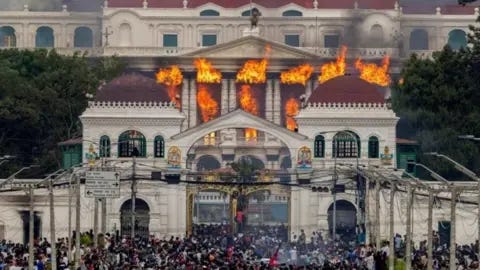
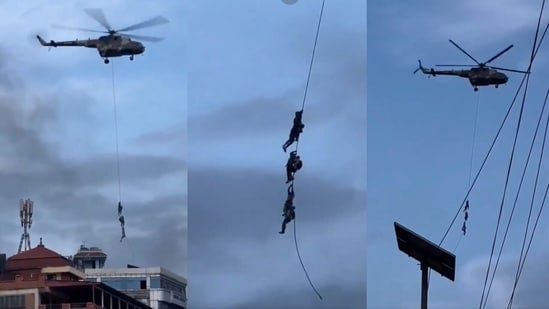
From Ukraine to Gaza and Sudan, violence took dangerous new directions putting more civilian lives at risk. And elsewhere the political rhetoric and tension amped up: outside asylum hotels in the UK; with ICE raids on immigrants in the US and the National Guard on the streets of the capital, Washington; with mainstream governments in Europe looking increasingly precarious; and southern Asia, long relatively immune to the pessimism and the disruptions of the contemporary West exhibiting its own vulnerabilities as students in Nepal and Indonesia seek to copy earlier protest movements in Sri Lanka and Bangladesh and take on what they view as corrupt government systems.
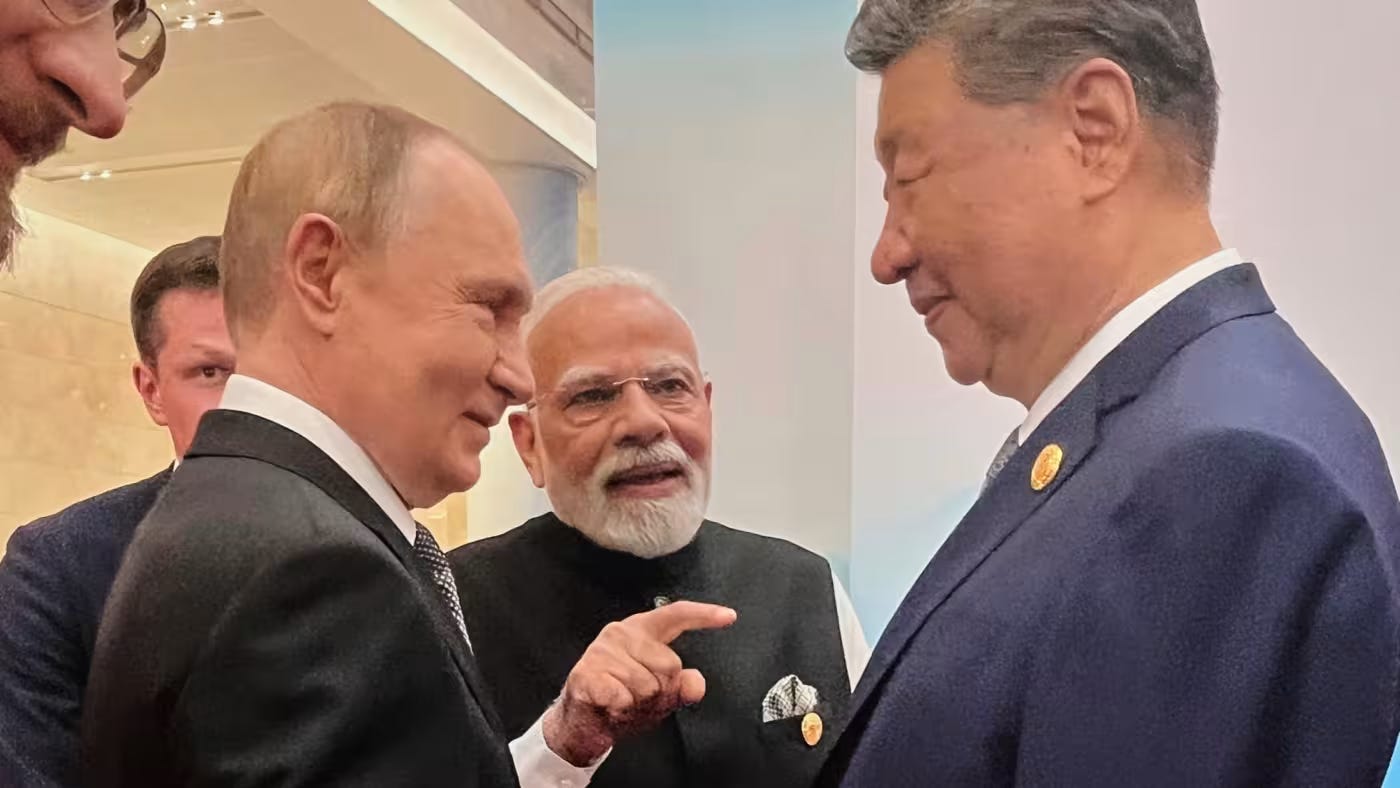
At a step above the national fray, the plates of the wider international order are in unpredictable motion. At the recent Shanghai Co-operation Organisation meeting, a photo of Indian Prime Minister Modi together with his Russian and Chinese counterparts was a stinging rebuke to President Trump’s propensity to make enemies out of friends and symbolic of a world that has abruptly lost its American anchor.
First the UN and its travails. A considerable portion of what follows draws on a piece that I wrote for last Sunday’s Observer.
When I was UN Deputy Secretary-General and the UN was under attack from the irascible John Bolton - then the US ambassador to the UN - an unofficial delegation from Montreal quietly slipped in to offer me an abandoned Montreal goods yard, needing redevelopment, as a possible sanctuary. I quietly shooed them away. Even if I could imagine the UN without Washington I could not imagine it without New York!
My successors may have to. The secretary general has just announced a 20% increase in office space in Nairobi as he both cuts his secretariat staff by 2900 positions, saving $700m, and decants staff to other UN cities. The humanitarian agencies, which - other than Unicef - are not headquartered in New York, are making even bigger cuts of up to 40% of their staff. At the moment the trimming of New York is budget driven but it may quickly get political.
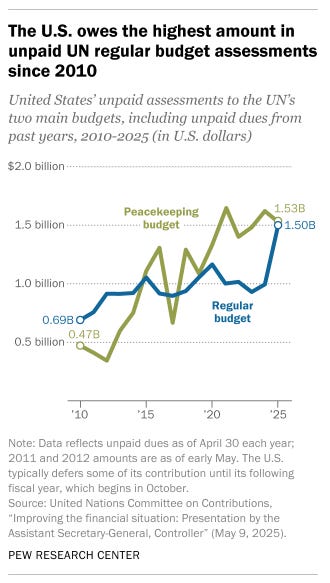
There are voices in Washington calling for a full withdrawal from the UN. Spending rescissions may throw the US into an arrears situation that costs it its voting rights as other countries lose patience. The Trump Administration has denied visas to the PLO delegation that had intended to travel to New York for UNGA; an egregious interference with its obligation as host country to allow delegations to come to New York for UN meetings. UN staff and international attendees at its meetings are increasingly feeling threatened or deterred from travel. Those living in the US in many cases no longer feel safe from roving ICE agents.
The latest malaise - and the UN has spent much of its 80 years struggling with unfriendly powers - may have begun with Putin’s Russia betraying the most basic tenet of the UN charter, a respect for a neighbour’s borders, with its invasion of Ukraine but Trump’s America has piled on. Doubling down on condoning war crimes in Gaza; threatening the independence of its northern neighbours, Canada and Greenland; and more generally turning the post World War Two order on its head with tariff wars, a rejection of international security commitments, and a disregard for the rule of law at home and abroad. These threats and actions fly in the face of almost everything the UN and its Charter are about.

As the UN readies to welcome leaders to its annual General Assembly later this month there is anxiety about who will even bother to show up. The real dealmaking on peace and security or contentious international rows about tariffs or debt seem to take place anywhere but the UN.
Trump Card
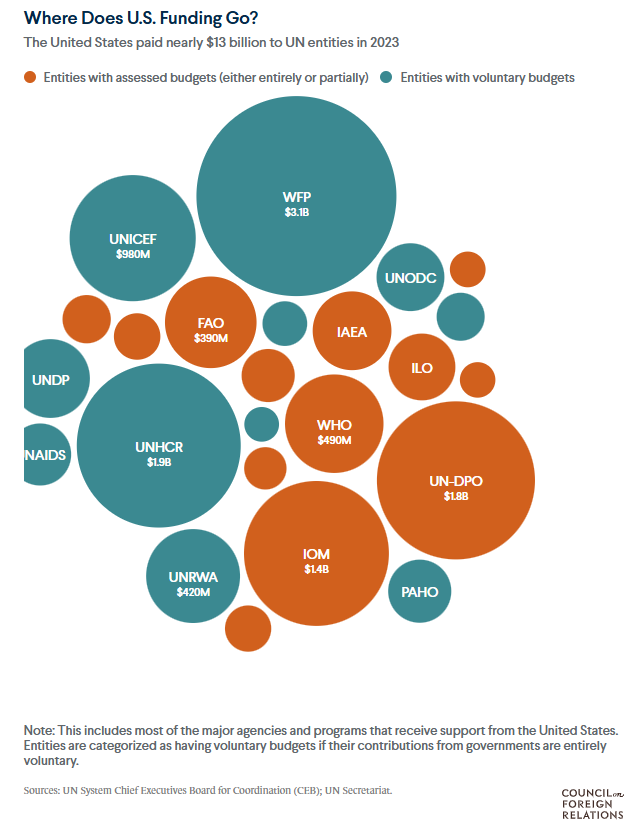
President Trump’s press secretary Karoline Leavitt absurdly claims “he has closed seven global conflicts around the world” and has scoffed at the UN’s record by contrast. At the same time Trump has decimated US funding for UN activities including lifesaving public health and humanitarian interventions. The Lancet has estimated his cuts could cost up to 14 million lives.
The UN itself seems frozen by the betrayal and rejection of its first parent. Its origin story is the very personal vision of President Roosevelt whose dream imbued its charter and values. The US has hardly been a steady guardian of that vision over the subsequent eighty years but it has been enough of one to allow that basic relationship to remain intact.
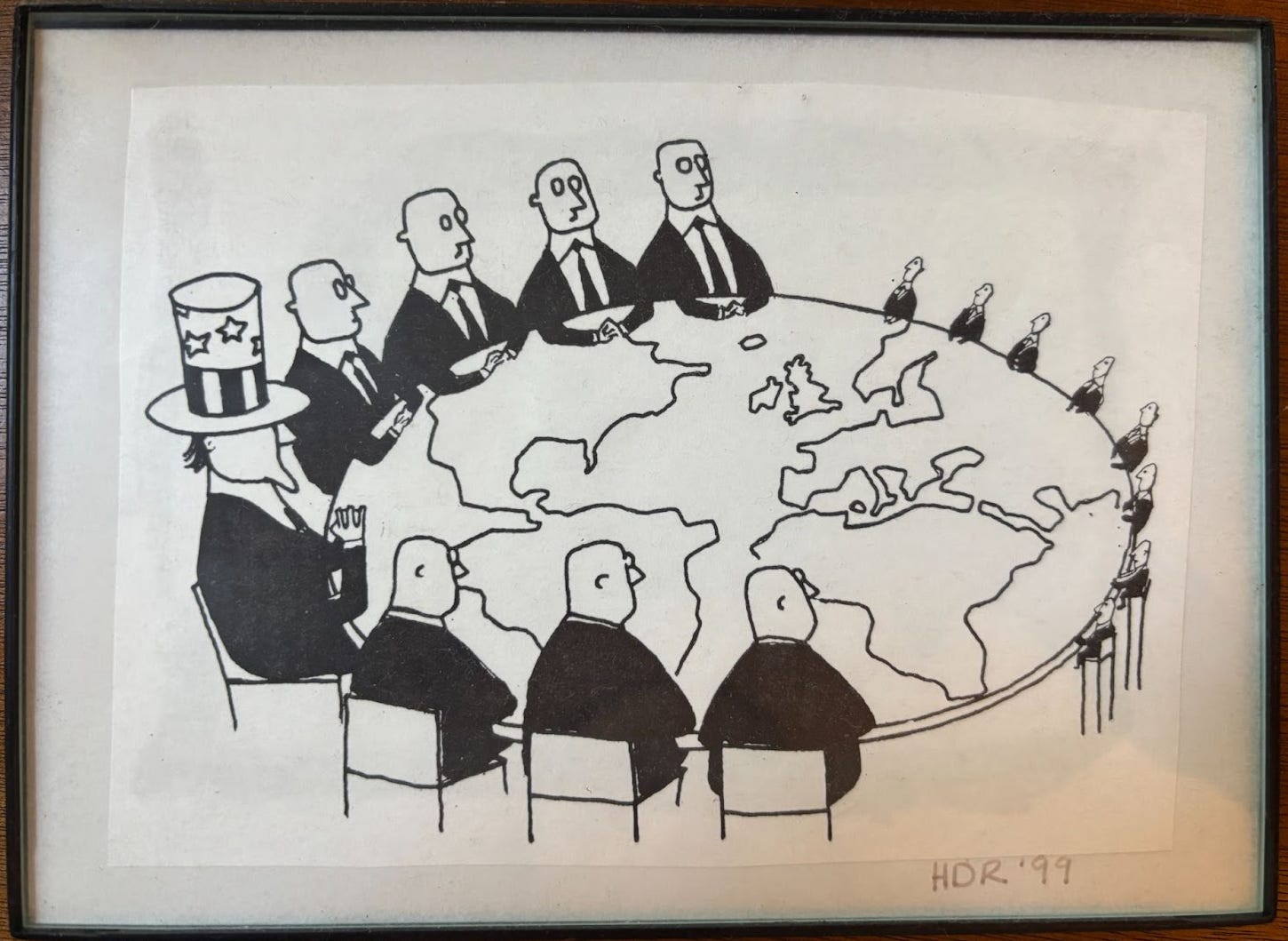
But now may be the time the cord gets cut. First, not because the UN has changed but because America and too much of the rest of the world has. Protecting Roosevelt’s original vision of a world with strong multilateral institutions, operating within a world of laws and treaties, is evidently at odds with the transactional America First, deal making of the current occupant of the White House. But second, seeking to tiptoe around a short-tempered parent has consequences for relations with the rest of its members. Many, despairing at where the world is going, want a UN that campaigns on their behalf for the values of the Charter. Until member states get that they will continue to use other fora, including the BRICs, the G20 or the Shanghai Co-operation Organisation (SCO).
G Minus One 1
There are an array of countries itching to step up and offer enhanced UN leadership from China, a controversial rescuer for many, but one very publicly espousing the rule of law as a counter to the current US; to a new generation of emerging powers such as India, Brazil and South Africa (Brazil is leading a push for renewing the UN Charter); to coalitions of smaller countries, developed and developing alike across regions, who deeply fear the consequences to them of the reversion to a world of raw power rather than multilateral rules.
"We must continue to take a clear stand against hegemonism and power politics, and practise true multilateralism," Xi said, in a thinly veiled swipe at the United States and President Donald Trump's tariff policies. (Reuters)
Until now the UN, and its former officials, such as myself, have always insisted its universality is its critical comparative advantage. Everybody is at the table whatever their differences. Unless the Trump administration denies the visa, of course.
The UN’s universality worked when leading powers subscribed, at least nominally, to the charter values. But today that has left the UN adrift. It seems to its many critics to stand for nothing. To recover purpose it needs to invert its priorities: championing the charter first; universality second.
That puts it on a collision path with the Trump Administration. For now rather than pulling out a more likely posture is that it grumpily straddles with one foot in and one out. It pulled out of the recent Seville conference on financing development, so allowing a consensus to be reached by other members.
Less Flattery, More Delivery
And even when one's mind goes to the prospects that the UN must leave the US, in truth for now it's more about how to work around it and accommodate. In a world where Trump management has become a deferential art form of flattery, obfuscation and swallowing of principles, the UN, rarely famous for backbone when it comes to the US, needs to find the courage to stand up and be counted.
But finding its voice is not enough. Antonio Guterres, its Secretary-General, and his colleagues actually have repeatedly spoken up on crises and climate for example but they are rarely heard. Neither the media or those who read them seem to think they matter anymore. They treat them as spectators, not players. The UN’s press briefing room is now, I am told, more mausoleum than the bustling centre for breaking global news that I remember.
The exception to an overlooked UN is the humanitarian catastrophe in Gaza. There they have a voice because they are seen to have real skin in the game. Bravely trying to get food in against overwhelming odds and protesting and challenging the Israeli blockade. So a revived UN is more than rhetorically poking the Trump administration in the eye, it is about getting back out into the world and fighting for the lives of the weak and vulnerable.
As other donor countries cut their aid budgets because of fiscal constraints and increased defence spending, the UN funding is at high risk. For the first time in nearly 30 years France, Germany, the United Kingdom and the the United States will all cut for at least two years in a row and I imagine more. On the UN side, the consequent cuts appear more a panicked move to cut costs rather than making the most of the crisis to really clear the decks and reset direction. To work out how to do more with much less and to reconnect to the founding vision.
Cut the Cord
To get the rest of its members back on side it needs to focus on its basic missions, starting with peace and security. Even if Gaza and Ukraine are arguably beyond its reach, because of America and Russia keeping them out, no such excuse pertains for the bloodiest current conflict in the world, Sudan, where the UN has been equally missing in action as it has in other Middle East and African conflicts or Myanmar where a brutal civil war also drags on. It simply seems to have abdicated from the hard work of peacemaking.
On the peacekeeping side, the blue helmets have been largely booed off the pitch in recent years. Replaced in some cases by unsavoury Russian mercenaries and other goons, as keeping the peace gets pushed aside for the priority of keeping leaders in power, but in others because they are simply no longer effective. A reinvention beckons, as drones and other surveillance technologies allow a much lighter, less troop-intensive monitoring of ceasefires than in the past, with the prospect of much more unassailable evidence of breaches when they occur. So where there is a political will to keep the peace - no longer a given - blue tech may be a better prop than blue helmets.
The UN’s humanitarian work remains a strong franchise but its current model of large numbers of expatriate operational staff is becoming unaffordable as the caseloads of those in need grow dramatically as a consequence of more wars and more climate emergencies. A reengineered approach would limit the UN role to light touch funders and overseers of relief but shaved of the massive delivery infrastructure of the past. Delivery would rely primarily on a network of local partners such as the mutual aid groups currently active in Sudan.
And there are other areas such as human rights, where more boldly challenging a US or Russia and their proxies, or indeed other spoilers, such as Saudi Arabia on women’s rights, Uganda on LGBTQ issues or China on forced labour, might restore energy and moral purpose. One can imagine majority but variable coalitions forming around these different issues and majority voting replacing the solemn consensus voting that condemns so much UN activity to lowest common denominator irrelevance.
By taking sharper, charter-based positions on issues, the UN does not need to betray its universality. When a country finds itself on the losing side of an argument in this new reinvigorated UN it hopefully won’t storm out but rather either change its behaviour or come back with better arguments next time.
It would allow a UN that was once again out and about in the world and noticed as ready again to take on the great issues and challenges of the times. And a place of active debate, not always mealy-mouthed compromise. President Trump would not be the first overbearing parent to have perversely done the bullied offspring a favour by forcing them to get out and stand on their own feet.
Nine Lives and Counting
Watching the faltering government in London versus its confident counterpart in Washington is a puzzle. Peter Mandelson, the UK ambassador to Washington is rightly fired for his Epstein connection; yet Trump, brushes off his association with the same pedophile; Angela Rayner, the Deputy prime minister resigns for underpaying stamp duty, a house purchase tax, by £40,000. Chump-change to Trump who has made literally billions in crypto and Middle East real estate deals in his first months back in government. Hardly a finger is laid on him.

Starmer has the parliamentary numbers and an apparently crushing mandate behind him but he is knocked off course at every turn whereas across the pond Trump, with the narrowest of congressional majorities, rides high. Is it a presidential versus parliamentary system; personality; a relentlessly prosecutorial UK media and an intimidated US one; political culture; an American economy resilient enough to survive the madness of politicians; or plain chutzpah that makes the difference. Most worryingly is it a sense that the narrative arc favours Trump. That the future of politics is going his way and Starmer is just a younger Biden, an interlude before the main show.
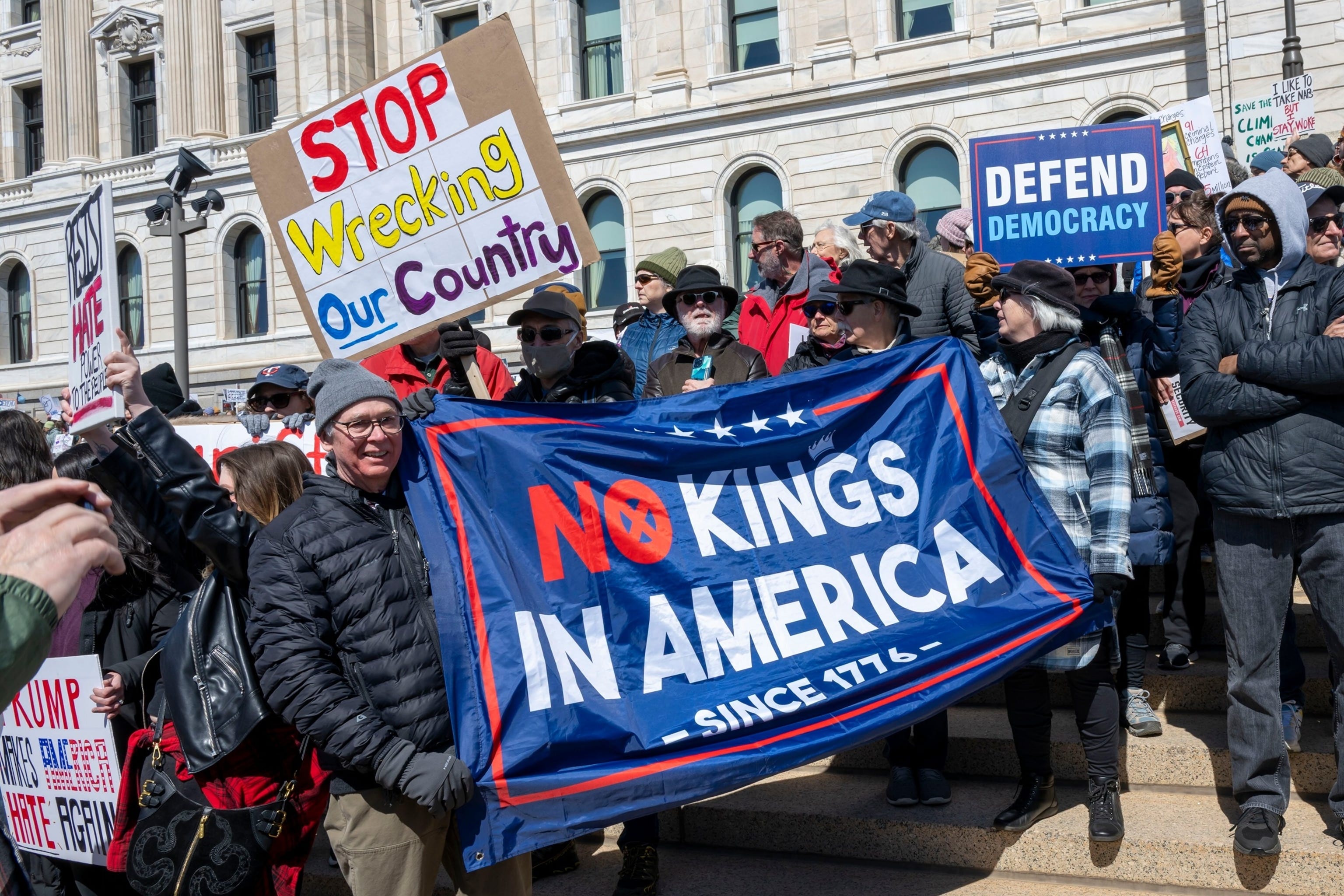
Ten years ago, the 1000th anniversary of the Magna Carta was celebrated in both countries. As someone with a life on both sides of the Atlantic I observed that the celebration seemed more noticed by Americans than Brits. Its intent, limiting the power of a capricious and overpowerful king; subjecting him to the constraints of the law and forcing him to recognise the rights of his subjects excited American friends while leaving jaded Brits largely uninterested. They took the rebellious barons’ victory for granted whereas Americans celebrated it as an important step in their journey towards the cherished checks and balances of their own constitution. Just 10 years ago that progress seemed irreversible. Next year the US celebrates 250 years of Independence. Will that occasion be similarly celebrated as about hard won human rights or be recast instead as a celebration of absolute Power? The indications are that America’s new ruler envisages the latter.
Not a dry eye in the Church
At a time when our public life seems to be filled with people behaving badly, I can't help but share with you a celebration of a quiet life lived well. This is the eulogy I delivered to a full village church following the death of my 103 year old mother in August.
Further Reading
Mo Ibrahim: 'Inaction on Sudan down to skin colour' - BBC Africa
Helpful from Project Starling on UN80 and emerging member state positions
Mike Froman on the leader-level SCO meeting and implications for broader US-India relations https://www.cfr.org/article/xi-modi-putin-and-new-geopolitics
H/t to Minouche Shafik: How to live in a G minus one world