
The Predator’s Ball
A rogue America, a region in turmoil and the need for countries like the UK to find new dancing partners; and step at times on Trump's toes including when it comes to a new UN secretary general.


Let’s Party. It’s another month; another display of shock-and-awe American and Israeli military capability. For a second time in less than a year Iran is the target. Less than 2 weeks into the war, three factors stand out: first, this is another Middle East war where both sides had had an incentive to exaggerate the weaker side’s military capability. The US was casting around for a reason to attack; the target, Iran, was equally bigging up its lethal strike power in the hopes of fending off that attack.
As with Iraq in 2003, we are told that Iran was about to pounce with long range ballistic missiles if there hadn’t been a preemptive strike. It brings memories of the dodgy dossier that claimed Saddam had weapons of mass destruction ready to go. The evident truth is the strike on Iran came now because of Iranian weakness– not strength. It was a chance to hit the enemy while it was still down after last June’s assault on its nuclear programme.

Second, the Iranian military weakness may not count for so much when for the first time since the Second World War the US has leapt into a conflict that involves central nodes of the global economy, including the region’s oil and gas infrastructure and its exit route, the Strait of Hormuz as well as the new global services entrepôts, Dubai, Doha and Israel itself. This is a war that jeopardises the global economy- in a way Vietnam, Afghanistan or Iraq, all a long way from any geoeconomic nerve centre, didn’t. It offers Iran an asymmetric opportunity to cause global damage when just a few drones or rusty old rockets get through and sink a ship in the strait, knock out a Gulf water treatment plant, or, as they already have, close down QatarEnergy’s gas production- nearly a fifth of the world’s LNG supply.

Third, the war is plain illegal. Keir Starmer’s “handwringing” lawyers - to echo Pete Hegseth, the US Secretary for War’s complaining term1 - are spot on. The fact that the war has widened and Iran has attacked its Gulf neighbours now provides legal cover to come to the latter’s defence. But the opening shot, the Israeli-US assault on Iran had no legal justification. And as bad, the decision was capricious. Trump capitulated to Netanyahu’s demand to join Israel in the attack a day after his negotiators in Geneva and their Iranian counterparts thought a deal was getting closer. I have this from two sources who were in Geneva.
“[T]he [Feb 26] proposal showed some flexibility in the Iranian position. It was also an opening offer and unlikely Iran’s bottom line.” - Arms Control Association

Despite a brutal crackdown by the regime on protesters that killed possibly tens of thousands, the Revolutionary Guards and their cleric allies have run a theocratic autocracy that is deeply unpopular with a majority of Iranians. Their regime is criminal in its cold blooded oppression of Iranians. But this attack seems likely to worsen, not ease, that.
My UN generation worked at a doctrine to deal with country cases where that kind of rule tipped into brutal domestic oppression, the Responsibility to Protect, but it has long since become a lost doctrine in the cratering world of multilateralism. So no effort other than an empty US exhortation to the unarmed protesters to rise up and overthrow their heavily armed oppressors was made by outsiders to stop the violence. And when war came, regime change came and went in a kaleidoscope of changing war aims.

Certainly the war has been met with understandable support across most of the Israeli political spectrum because Iran with its ballistic missiles was a much more formidable threat to Israeli civilians2 than Hamas (other than the horror of October 7th) or Hezbollah. It is an existential conflict. Unlike the US, this war is understandably deemed by most Israelis to be in their interest.
In the United States polling shows deep reservations. It’s the least popular start to a war since modern polling began. But the war is predictably more popular among Republicans compared to Democrats and for some MAGA Republicans, surprisingly more popular than for other Republicans. In that corner of America it is being praised in almost Crusader-Christian terms as a Just War.

There does seem to be a brand makeover of America First underway in MAGA circles. The first version was that of an Administration that stayed home and fixed domestic problems. No more forever wars. Instead its mission was to reverse de-industrialisation and the marginalisation of a betrayed white working class. That remains the MAGA of many of its major influencers.
Now, however, its Supreme Influencer, Donald Trump, is offering them bread and foreign circuses instead. After the humiliations of Afghanistan, Iraq and indeed Vietnam, Trump’s America aspires to walk tall in the world again. Perhaps it will distract them from domestic failures, the classic diversionary tactic of caesars.
“I said it’s a great job and people all around the world are cheering you on,” [Laura] Loomer told the FT. “He’s making us proud to be American.” - FT
What marks out the Trump Administration, and indeed Putin’s disregard for the law on Ukraine, is its shamelessness and completeness3. Bush sort of tried in 2003 and Blair tried a lot harder still, to get the right UN Security Council resolution blessing for the invasion of Iraq. In the end they went in without. However, lawyers could genuinely disagree about the legality of that conflict even if later the legal case for war fell apart because it was found to rest on false intelligence.
In my years at the UN a huge amount of time and thought went into trying to define what was a reasonable trigger for a preemptive strike. Just how close to hitting you did an adversary need to come before you had that right of self-defence? In an era of destructive modern weaponry, including nuclear, diplomats recognised a country couldn’t always wait till it was hit first. None of those debates mattered a jot in this case. This was a power play in the rawest sense of the term. They had the weapons, the means and an enemy on its knees so Israel and the US took advantage to try and complete their re-ordering of the region.
Balls-Up
Days in, it’s much too soon to score the result of this which extends an extraordinary set of Israeli wins since the tragedy of October 7th. On all conventional counts, the US and Israel are demonstrating overwhelming force and dominance. But the regular battlefield isn’t everything. As I suggested above, this war is playing out in the midst of some of the more critical, but vulnerable, parts of the global economy and a lot of stuff may get broken. Call it a ‘bulls in the china shop problem.’ This war may also have a long tail:
First, if Trump had allowed in his first term the completion of the JCPOA negotiation to ensure that Iranian nuclear development was peaceful, the region might have been a much quieter place in 2026. Diplomacy then, many knowledgeable observers believe, could have accomplished more than this war has done now. And a real kicker, Iran may now remain nuclear free but it’s less clear that regional neighbours such as Saudi Arabia and Egypt won’t embark on their own nuclear weapons development. The Middle East is now in a dangerous arms race. And in the meantime Trump and Putin seem to be walking away from global nuclear arms control. This war is making the region more, not less, dangerous.
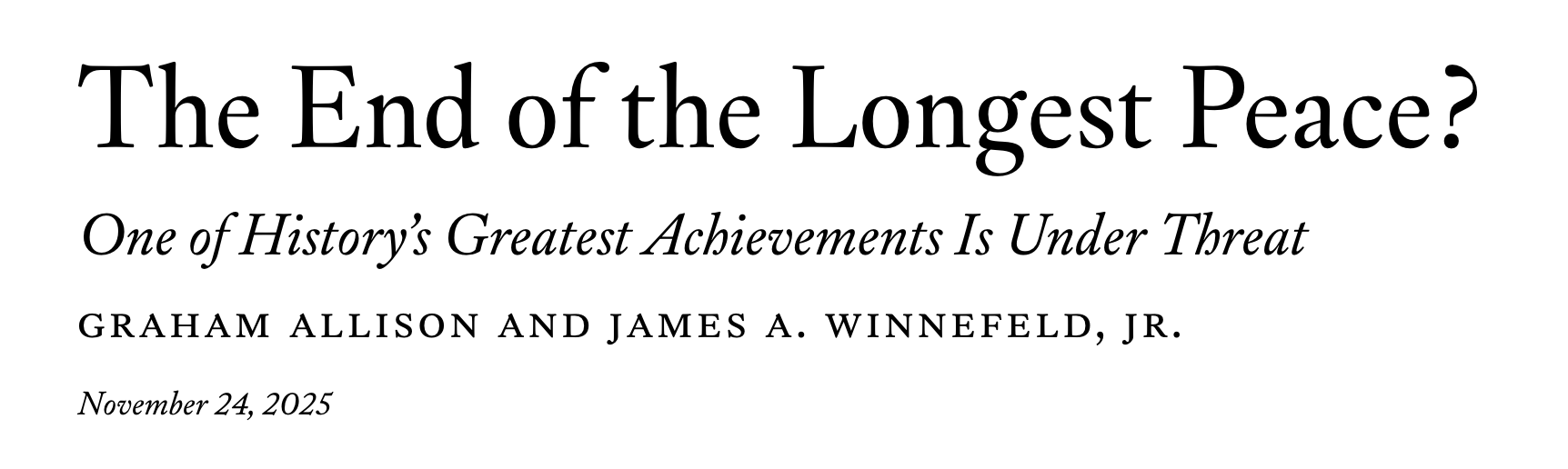
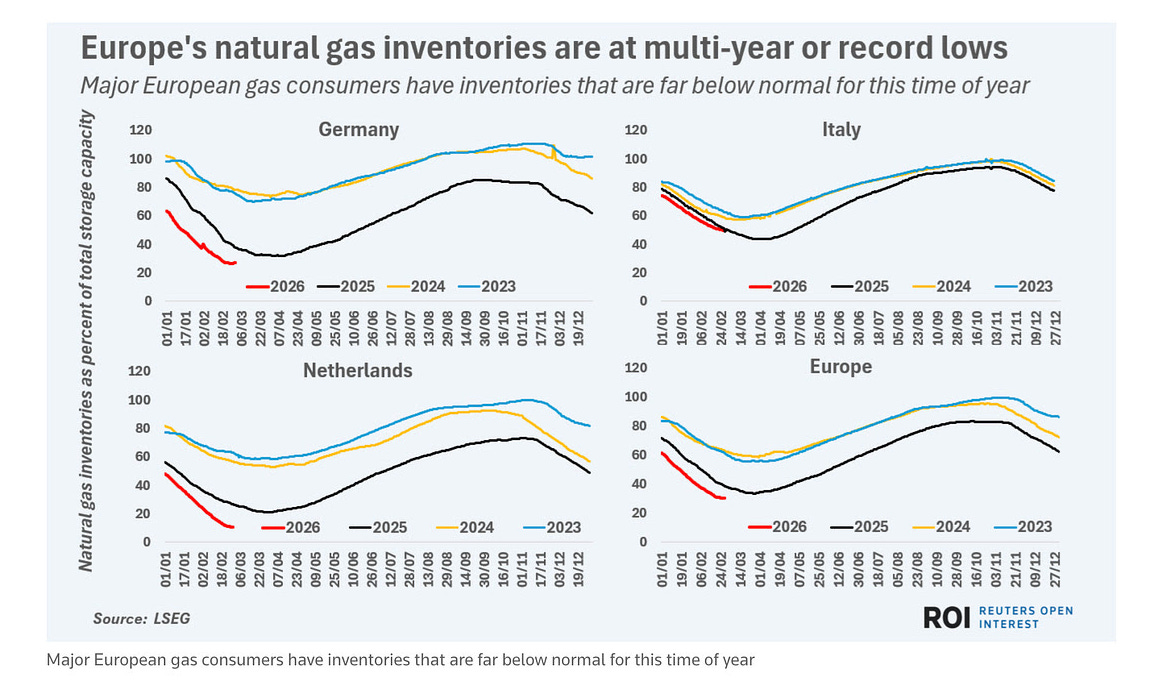
Second, the markets and politics may not so easily fall in line. Just as the stock market helped tame Trump on tariffs, so the commodity markets may also push him to an earlier conclusion on Iran than Israel wants. Soaring gas prices at the pump could cost him the American motorist’s support on the eve of the midterms. Similarly, slaying the Supreme Leader may play well initially. But assassination is a dangerous card to play. The long conflict between oppressed Shias and their Sunni rulers may well be reignited by the martyrdom, as many see it, of the older Khamenei and his family. His son’s ascent is early evidence of Shia resolve.

Third, whatever slight hope there might have been in the region for a political way out of its generations’ long tailspin is likely lost. The Abraham Accords, almost the only significant diplomatic achievement of Trump’s years in the White House, is likely to stall. While Gulf leaders may privately applaud the degrading of the Iranian regime and hope for its overthrow, their own streets think very differently. A conservative Arab monarchy/Israeli/ US-backed alliance in the region to stem the spread of radical Islam and build regional prosperity and therefore stability looks more elusive than before. Israel has elected since October 7 to pursue a security rather than political solution to its regional isolation which means it is likely to shed, not gain friends, as the likes of Egypt, Jordan and Saudi Arabia are forced to tack away.
Fourth, the conflict may undo the upside down order of recent years in the region. Its old capitals, Damascus, Cairo and Beirut, had fallen into decline. Beirut’s corniche- once the Arab world’s most elegant street- is a pockmarked war zone. But an alternative, a new ahistorical civilisational mirage had seemed to rise in the sands of the Gulf as oil and gas coffers funded its new cities. Culture, history, wealth were all acquired. This new world was not, it seemed, constrained by history and the wars and sectarianism of the old Middle East. Now that old Middle East is lapping at the new world’s doors as Iranian drones rain down. The painstakingly built reputation for stability risks being shattered.

Party Games
Let me look at the war through the eyes of the UK. When I was a toddler, President Eisenhower stopped a real Anglo-French folly that they had been put up to in no small part by the Israelis, the attempt to seize back control of the Suez Canal. It was an imperial nonsense that cost the British prime minister of the day his job. We are in no position to return the favour and rescue the Americans from their contemporary screw up. When a superpower veers off the reservation, there is nobody able to pull them up.
But that doesn’t mean we have to pliantly bounce along in the wake. Two hundred and fifty years on, it is time for our own little Declaration of Independence, a UK foreign policy that doesn’t loyally revolve only around the US.
The bones of it are in clear view:
a stronger, more independent military capability;
a re-engagement with Europe around the transformational imperative of the war in Ukraine and the Russian threat;
a Mark Carney-like throwing ourselves in with other middle powers to build restraints on superpower behaviours;
a revived multilateralism that doesn’t just passively spout rule of law norms but gets stuck into resolving rogue regime issues like Venezuela and Iran through robust diplomacy;
and a revival of a soft power profile that allows us to re-champion a values-based approach to international affairs as an alternative to the current jungle rules.
I have given two talks this month about British foreign policy, more than at any time since the failure to secure a second Brexit referendum, and sense a new appetite for a subject that had lain neglected. It was a casualty of Brexit, because for all the claims of the Brexiteers to the contrary, like early MAGA, it was a retreat home. It was leaving the world even more than it was leaving Europe. But the blinds may be lifting.
For a Labour Government it offers possibly a last chance to put some differentiation and purpose into how it governs. Having not found a narrow domestic narrative that reflects its principles of individual and community in any plausible and coherent way, it now has a chance to start again abroad. As Trump pulls his own sleight of hand and redefines America First as America in global command, so the Starmer Government has a slim window to define itself as a middle power social democratic champion of a politics of values, rather than one of power alone.
That means not just getting our limping military in shape and kitted out for a warfare in Europe. What that might look like is undergoing its own revolution in terms of arms and tactics on the battlefields of Ukraine. New generations and types of weapons might allow some opportunity for diversification away from US to European suppliers.

It also means reviving soft power. The UK hid behind the US on its aid (ODA) cuts. Now the US Congress has pushed back against the White House and restored some of the Musk-Trump cuts. This means that compared to two years ago, the UK is cutting ODA by a higher percentage, 27%, than the US, 24%. And in volume terms, it’s no contest – the US still has more than $50 billion to deploy whereas the UK will have about S7.7 billion. So the US, the hard power titan, even beats us at our own game, soft power.


At the height of the New Labour Government’s standing, pre-Iraq, it was a leading voice and funder of the most successful global development the world had ever seen; and it fed back home into securing the support of university-educated young Brits for whom it was a central part of Labour’s appeal. Along with a dynamic creative industries sector, a relatively thriving BBC, the British Council and a purpose-driven civil society, there was a field force promoting British values around the world.

It is easy to romanticise that recent past. And, I lived in the US in those years so add the rose tinted glasses of the expat. Nevertheless, there was a social cohesion as Britons felt they were all growing a little bit richer together. That has been replaced by a bleak mutual distrust and polarisation which among other things Russian disinformation appears to happily feed on. National security today is minds, not just boots.
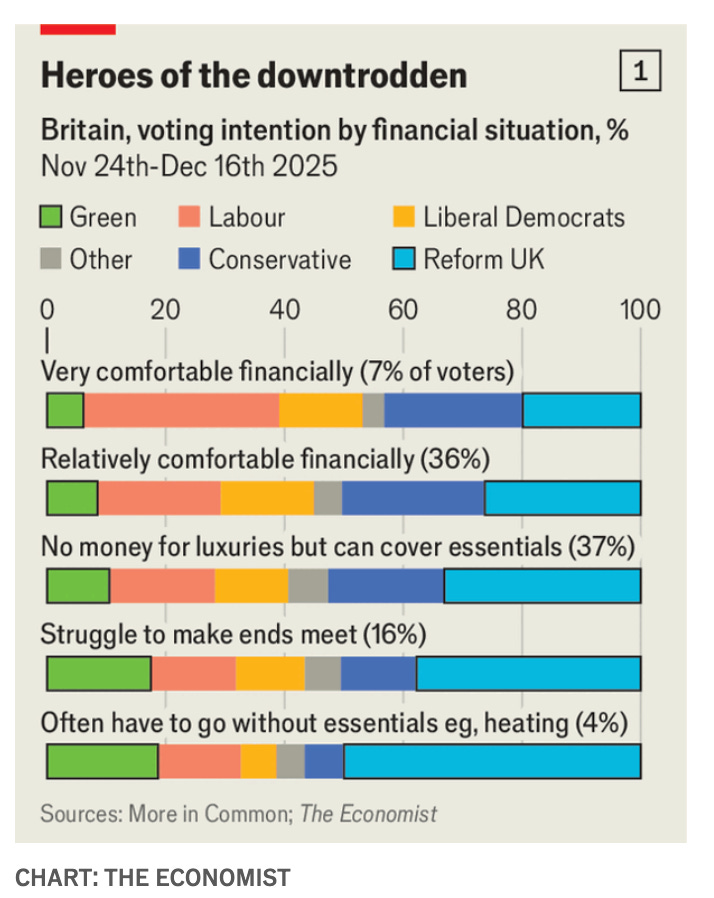
A lot of that past is not, and should not be, recoverable in its old form. But there are lessons in its seamless connection of a Britain abroad and at home, pushing an ambitious set of social reforms that created a distinct Labour ideology for its day. There was a narrative.
Dancing Partners
Now Starmer needs to seize his Love Actually moment and stand up to the US. Not in eye-poking ways that further threaten NATO or the basics of the US-UK relationship but rather smaller steps that aim to rub the shine off the “Special” in the Relationship.
An early start might be to signal that Britain will act as an agent of the wider membership in the forthcoming election of a new UN Secretary General. In other words it will use its vote, and if necessary veto, to stop the P3, the US, China and Russia, imposing their choice on the wider membership. Not for the Brits to choose an alternative candidate but to insist that whoever is chosen has been properly vetted and questioned by the wider membership and enjoys majority General Assembly support. Almost certainly that will, and should, be a woman. France, as the fifth veto holder and never willing to be outdone on such gestures, would almost certainly join such a British endeavour. And getting an effective Secretary-General would be no small victory. Part of the UN’s malaise is its headman problem.

Another opportunity is the G20 which the British will chair after the US. Foreign office mandarins wearily declare that their main ambition for the meeting, still 18 months off, is that everybody shows up. The Americans have banned last year’s hosts, South Africa. Full attendance seems a dismal little ambition. Rather, Britain should resurrect South Africa’s debt and development agenda and if Trump doesn’t show up, so be it. It would mean a better communique but more importantly it could be the real launch of Carney’s Middle Power alternative- a G20 without Trump.
The reaction of some will be why burn bridges when Trump will be gone before long. But as I have argued before, the fact that checks and balances have failed at home and abroad to contain Trump forces a moment of reckoning for Western democracies. They cannot put themselves at this risk again. They need to strike out now and build an alternative vision.
History repeats
For a fictional insight into the death spiral of the Israeli-Iranian contest, I recommend David McCloskey’s The Persian. Just published, the author, a former CIA Middle East analyst, reaches deep, despite the apparent limits of the spy thriller format.
And for an evocative reminder of earlier American over-reach, watch Cover-Up on Netflix. This is a documentary that explores the career of Sy Hersh, the investigative journalist who exposed the My Lai massacre during the Vietnam War and then Abu Ghraib during the Iraq War. A friend, Mark Obenhaus, is one of its two directors. It’s been winning awards.
Best,
Mark
On the off chance this edition wasn’t long enough for you…
Foreign Policy removed the paywall on its Iran coverage for 48 hours https://foreignpolicy.com/ - it is still accessible as of this post’s publication
DC-based oligarchs mansions tour!

 Tiktok failed to load.
Enable 3rd party cookies or use another browser
Trump’s vision of America: feature or bug?
Dispatch from the US Congress - responsibility to plan?

Body cam footage of the 2025 US Institute for Peace takeover
“Unlike so many of traditional allies who wring their hands and clutch their pearls, hemming and hawing about the use of force.” - Sec. Hegseth, source
Includes Israeli civilian death toll: https://www.reuters.com/world/middle-east/how-many-people-have-been-killed-us-israel-war-iran-2026-03-10/
UN Security Council Members Limit Criticism of U.S. over Iran - Richard Gowan