No Checks, No Balance
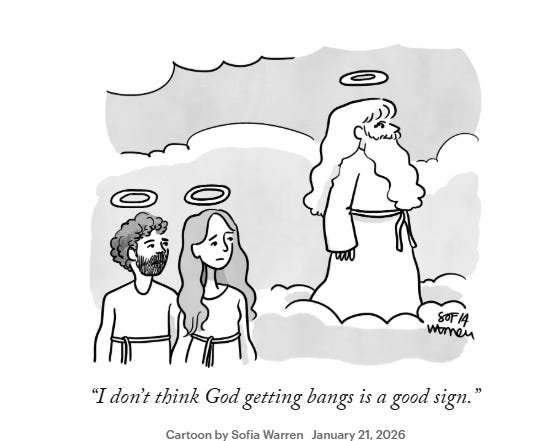
The Emperor has no clothes.

I wish they allowed small boys into Davos. Once briefly its vice-chair, I can attest to its Big Boys only culture! If a little boy, or girl for that matter, had been in the audience when President Trump spoke, he might have called out what many were thinking: “The Emperor has no clothes”. The snarling, error-filled speech with its sub-Don Corleone threats was for many in the audience, it seems, something of a revelation. They could no longer deny their own eyes and ears and shrug it off as media exaggeration, the man was off with the faeries- and nasty ones at that.
In its way it was as revelatory to an international audience as President Biden’s shambolic appearance in the first 2024 presidential debate was to Americans. Biden had emerged from behind the White House cocoon and was exposed as no longer having all his faculties. Now Trump is similarly revealed as losing his marbles.
In more normal times the opinion columns of newspapers might be filled with debates about whether the twenty fifth amendment to the US Constitution should be employed to remove President Trump from office. His impairment may be different from Biden’s but his narcissism has hardened with age into an evidently world-threatening liability. His niece speculates that he may have inherited his father’s Alzheimer’s. However removal would require an independent-minded cabinet, not second-rate sycophants, together with a moment of bipartisan Washington reckoning. That’s not about to happen.
Trump’s posts, speeches and press encounters provide daily evidence of an unhinged individual stumbling from issue to issue with no compass points or governing theory other than a transactional obsession with deals, dominance and prestige. And it must be said - a much quicker political instinct than his plodding rivals.
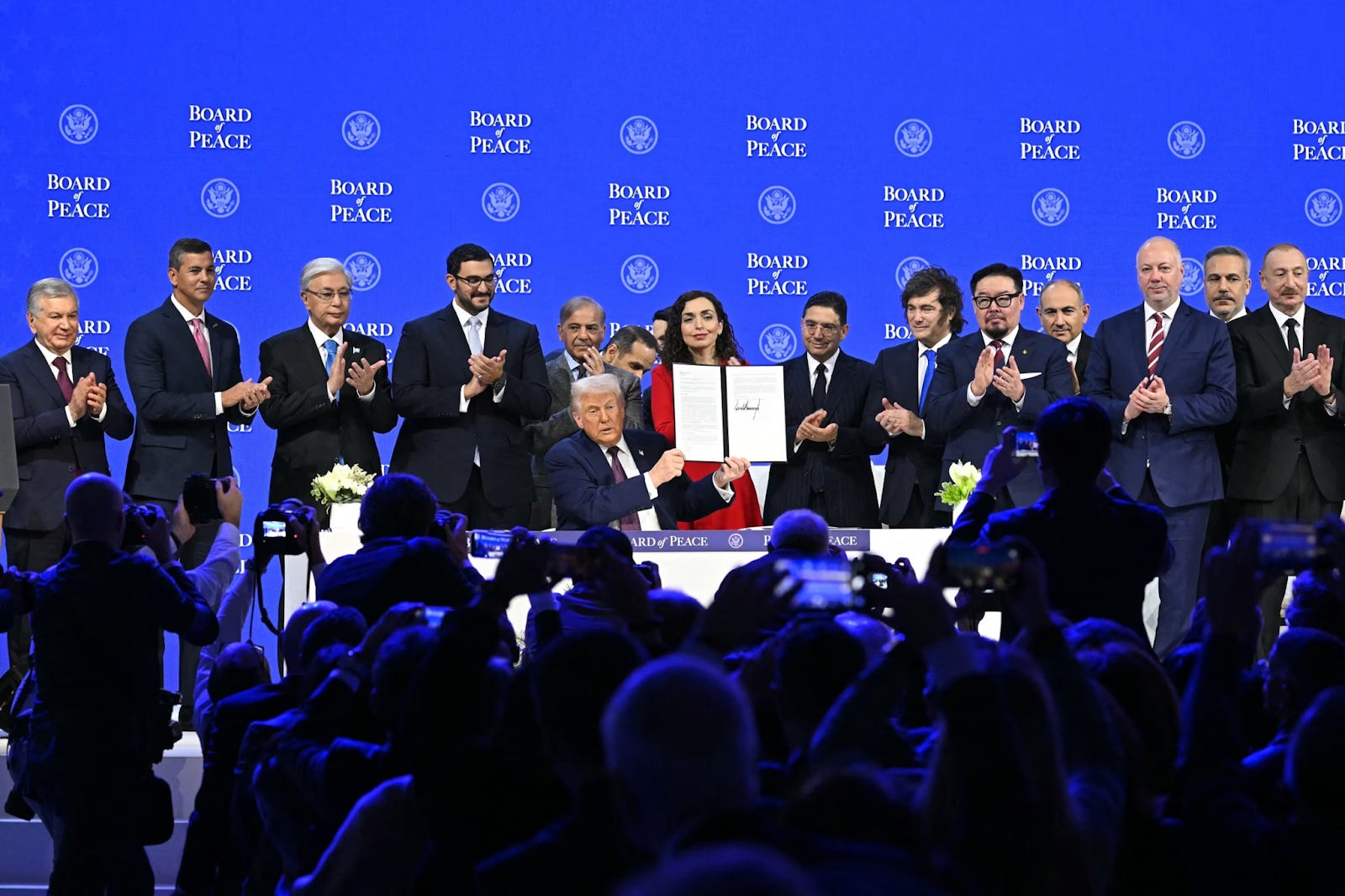
His Board of Peace launch, which came after he had petulantly complained publicly to Jonas Store, the Norwegian prime minister, that he was giving up on peace first after he had been rebuffed for the Nobel Peace Prize. At its launch he was surrounded by a bunch of autocrats as more mainstream leaders eschewed membership. Despite the Davos setting it seemed more saloon than salon.
Ambiguity Reigns
Trump is taking America into very dark places. As Davos was gathering to greet the preening emperor, I was with a group of African leaders. A former president complained that Africans were still being held to standards of democracy and governance that those judging them had betrayed at home. This led me to intervene that obviously a president who had attempted to retain power by a coup and voter suppression; had used his military in illegal foreign adventures and against his own citizens; was guilty of corruption on an epic scale, as well as daily acts of illegality, should be called out.
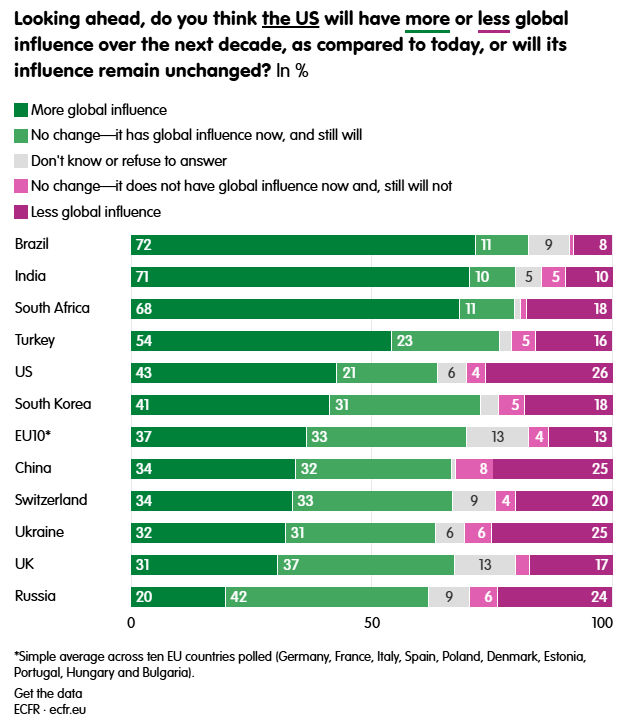
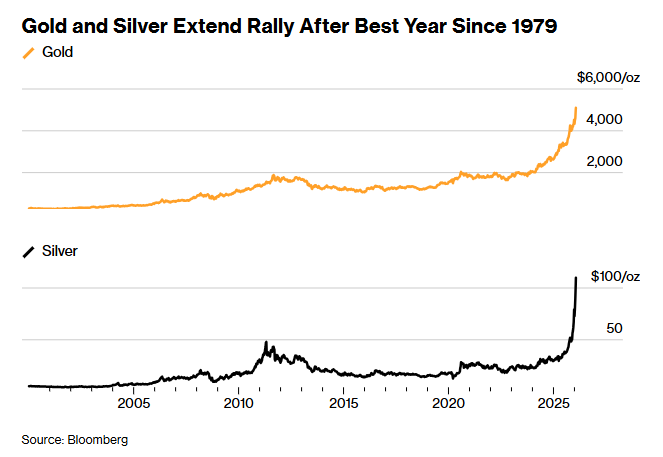
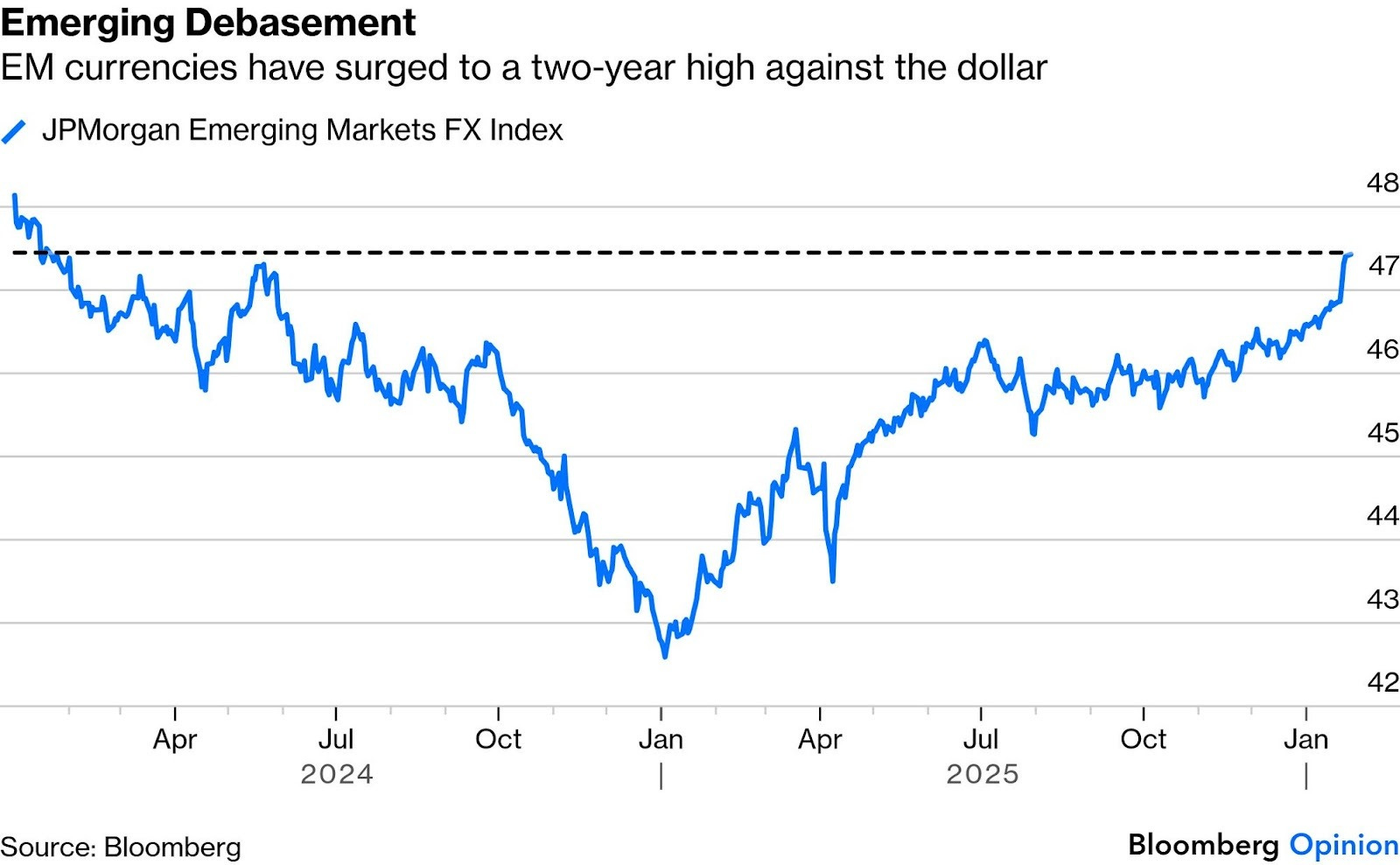
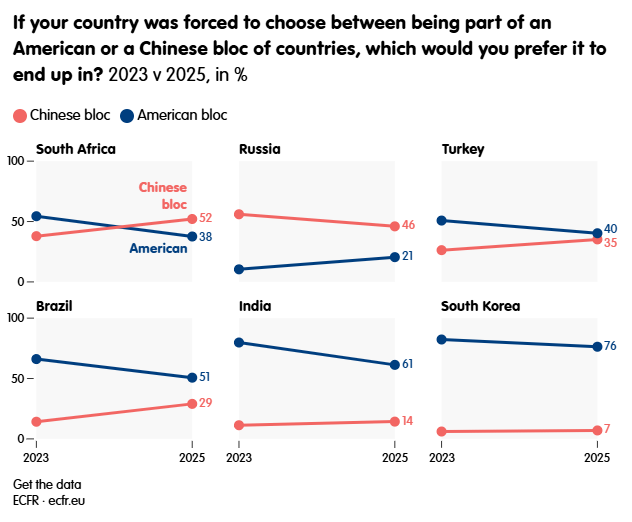
I didn’t mean Museveni in Uganda or Biya in Cameroon as my audience might have expected. Neither is guilty of quite such a scale of offenses. I meant of course Donald Trump. The sheer speed of the fall of America’s international standing is something that we all struggle to comprehend. It is offset and disguised by moments of dazzling displays of American capability, the military seizure of Maduro, or the tech bros and their AI wizardry at Davos. That confusion is reflected in the chart below.
And in the financial markets, there is continued dollar depreciation and a giddy gold price but a US stock market held high by tech stocks. And the political market place is sending its own ambiguous signal. America’s allies continue to infantilise themselves by seeking to ingratiate but are derisking by diversifying away from the US in terms of trade, security and political links. Not deserting but limiting the risk. Mark Carney gave his Davos riposte speech to Trump after visiting China and then sensibly left town before a visibly offended Trump arrived threatening retaliation. Trump withdrew his invitation to Carney to join his Board of Peace – no doubt saving Carney the trouble of having to say No.
Yet even the Board of Peace evokes mixed reactions. Its Gaza role is endorsed by the UN Security Council, and the Europeans and Canadians want in because they consider it the only game in town, despite its lopsided structure that puts Trump lieutenants in charge. His unexpected expansion of its draft mandate to whatever global peacemaking takes his fancy is what deters and alarms them.
As many commentators have observed, for the first year of Trump Two it was still just about possible for allies to shrug off this Administration as an aberration. Certainly Britain’s Keir Starmer did, as did his European counterparts. The strategy was to flatter and placate while reassuring each other that Trump would be gone in three years. In their minds, the need to keep the US on side on Ukraine, a European conflict, and deep historic transatlantic ties, or more bluntly dependencies, gave them little choice.
This is America
A trip last week to the United States further convinces me that a more fundamental rift is taking place. And this is despite spending time at the University of Pennsylvania’s Perry World House as a visiting fellow where the students and faculty I met were as open-minded and engaged in the world as you could hope. It remains America at its best. But we are now in a world of two Americas and the other one is ever more hostile and dark. A smart internationalist Republican, a never-Trumper, opined to me that she was convinced that Britain was pockmarked with No-Go areas where high levels of immigration had driven out the police and white people.
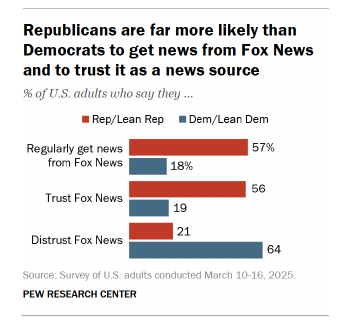
And a little channel-flicking on cable TV or surfing social media confirms, as it has for years now, that America is a land of two hostile media universes and the one, centred on Fox News and right wing influencers, has as a central narrative that white culture is being deliberately swamped and drowned by immigrants.
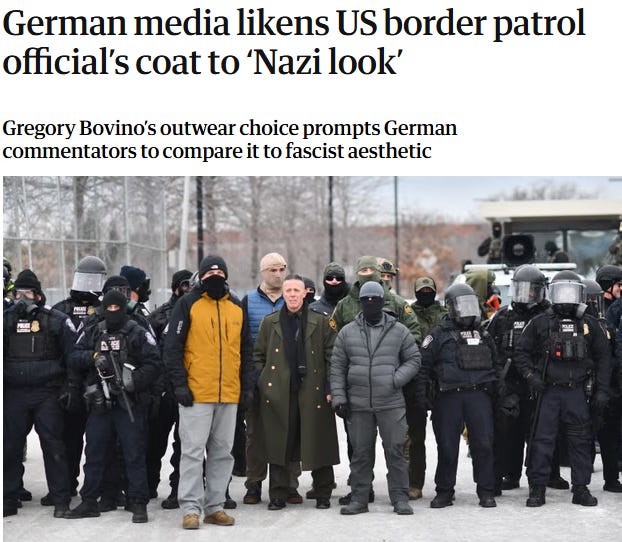
And we were there in a week where America came dangerously close to open conflict in Minneapolis. A second victim was gunned down by federal agents, increasingly Trump’s unaccountable SS – similarly staffed it seems with untrained vigilantes. A nurse at a Veteran’ hospital whose unprovoked killing was caught on video, his death has become a spectacular own goal for the Administration. Trump seems to be sounding the retreat. Bovino has been sent packing and the president has distanced himself from some of his proxies’ early false claims about the killing.
In an ironic meeting of names, the snow may save ICE from triggering near civil war. An extraordinary snow storm and freeze may keep some of the demonstrators and agents off the streets and allow tempers to cool. But there seems little doubt that today America is on the edge.
Some will not recognise that last claim and consider it as far-fetched as the claim that Britain was disappearing under a wave of crime and immigration. And that is part of the problem. Beneath the high politics we are starting to form very negative stereotypes of each other. Europeans and Americans are starting to come apart in a way that I am not sure their leaders understand. The British establishment has always held to a tight Atlanticism as though its status depended on it.
Ordinary Brits have always been a bit warier, reveling in trips to New York, Miami or California and sucking up Hollywood and the wider culture but maintaining a healthy suspicion of overbearing Yanks. My wife and children who carry American accents, despite many years in the UK and British passports, sometimes run into the mild derision of taxi drivers and others. Our youngest revels in being the only one who sounds like a British native.
But this is something different. It is hardening into a visceral dismissal of the America of the last 250 years. We are imbibing a dystopian view of an America in the last stages of empire- corrupt and failing- and in the hands of the kind of crafty nincompoop that history tells us late empires produce. He’s America’s George the Third or Rome’s Nero. He may be but we need to keep a firm hold in our minds of the other America, the open one I saw at the University of Pennsylvania. And the one that still leads the world in many fields.
No Kings
That other America will come back. It is leading in the polls and the midterms are just ahead. One of its most interesting young representatives, Zohran Mamdani, has just kicked off his term as mayor of New York. As I write this he has just been photographed helping to dig a driver out of a Brooklyn snow drift. In the meantime Trump was hosting a black tie dinner at the White House to launch a documentary of his wife Melania. Its making and promotion was in the form of a lavish tribute paid by Jeff Bezos of Amazon to enjoy favour at the emperor’s court.

And we need to retain the self-awareness that it could happen here. In most of Europe the populist right is currently in pole position to win in the next electoral round or is already in power in several cases. White working class alienation, as the foundation of a broader coalition of the disaffected, is evidently not unique to Trump’s America. The African leader I referred to earlier was right to point to a wider crisis of western democracy.
Check, Mate
British colonial administrators imagined themselves to be bringing enlightenment and progress to their colonies but history hasn’t been kind on that score. Power needs limits. The growing international breach with Trump is framed as a breakdown of trust in America’s word. I suspect it heralds something deeper: a wariness of imperial power.
That is the lesson we are relearning again. Liberals started the Vietnam War. Traditional Republicans with Democrats’ support blundered into Iraq while hiding behind the lie that Saddam Hussein had something to do with 9/11. Countries need checks on the exercise of power abroad as much as at home. Mark Carney suggested that Middle Powers should provide that counter “because if they weren’t at the table they were on the menu.”
He also argued that the pleasant fictions of the international rule of law had been truly punctured. Middle powers had to throw their power around to get noticed. And that’s where I depart from his thesis. We don’t need more power unleashed. Rather, harnesses matter. The UN’s creation was American statesmanship at its best. A framing of a rule and institution based international order that would head off war and spread development. Carney recognises that it has been undermined over the years by Big Power double standards. Yet the solution surely is a relaunched UN which better polices its members rather than a reversion to a nineteenth century power politics.
At present the UN seems in extreme jeopardy. The Board of Peace is just the most obvious immediate threat to its tattered authority. But talking to an ambassador from a Caribbean country last week I was left in no doubt of his resolve and others like him to fight for a reinvigorated UN. Canada and Europe belong in that fight. No defecting please.
I make the case for that renewed international solidarity, or at the very least coalitions of the willing in this article in The Observer.
Finally four books that have particularly impressed me during the holidays:
Andrew Ross Sorkin’s 1929: The Inside Story of The Greatest Crash In Wall Street History. It shows the interplay of personalities, and the deeper forces making the American manufacturing economy. I would have liked a little more Main Street but Sorkin brilliantly captures the Wall St players who lured in American middle class savings through the promise that America could only get richer so the stock market was a one way bet that nobody could afford to miss out on. Ring any bells?
And another book with current resonance, The Director, a novel by Daniel Kehlman about an evidently deeply talented German film director GW Pabst who wants to make it in Hollywood, but whose ways bewilder him, so finds himself falling back instead on Hitler’s Berlin where his personal compromises end up making him, a staunch liberal, an unintended Nazi propagandist.
And to cheer you up a glorious Henry James romp, if that’s not a contradiction, John Banville’s Venetian Vespers, a glorious tale set in the Venice of 1900.
And similarly if you enjoy a Trollope-like excursion into the lives of Britain’s political class, Elizabeth Day’s One Of Us is a great read.